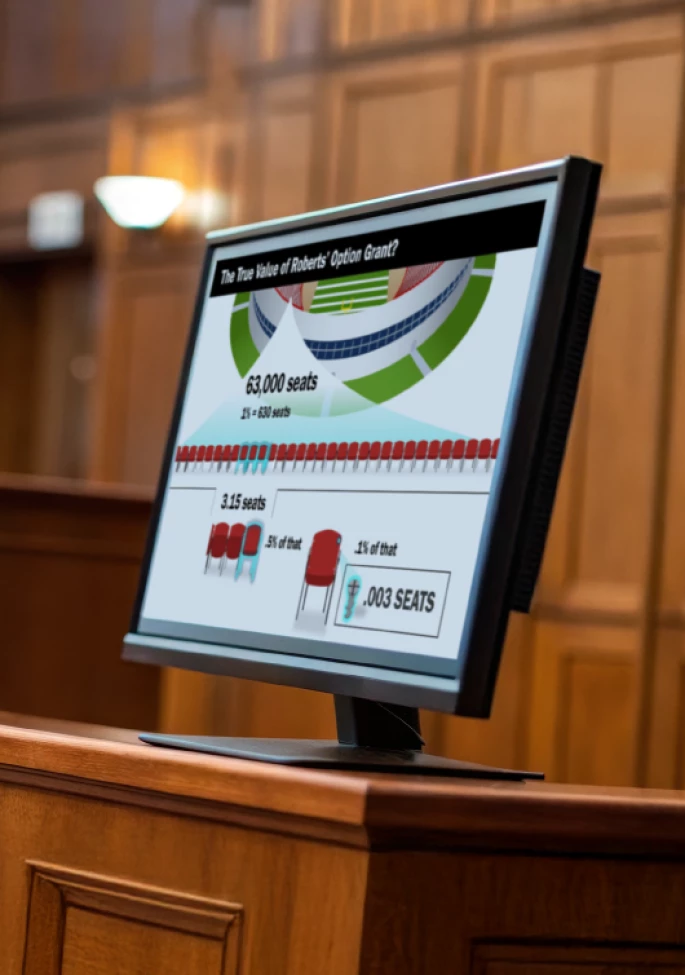

Effective jury trial strategies are based on how jurors interpret and retain key information. Not only must trial attorneys effectively communicate the condensed factual details of the case, but they must also engage jurors to care about and remember the information presented.
George Bernard Shaw wrote, “The problem with communication is the illusion that it has been accomplished.” What does this mean for the courtroom? If jurors are not interested, they will not remember the facts of your case, especially numbers, dates, and other details.
Voice modulation, the ability to simplify technical information for a non-technical audience, and an engaging story structure are necessary for advocates to effectively communicate their client’s case. However, since 65% of people are visual learners1 and more apt to remember what they see or touch compared to what they hear,2 effective trial visuals are potentially the single most critical factor in jurors’ understanding of your case.
In our experience, jury research consistently shows that visual aids improve recall and influence how jurors apply facts during deliberations. And when presentations do not include visuals, jurors point out to the attorneys that a good visual would have helped them engage with their arguments. This is why we recommend that attorneys have a compelling visual for every main point in the case and develop, hone, and test these visuals from the very start—not as an afterthought on the eve of trial. High-quality trial visuals can give your case a powerful advantage.
Examples of Effective Trial Visuals
1) Timelines
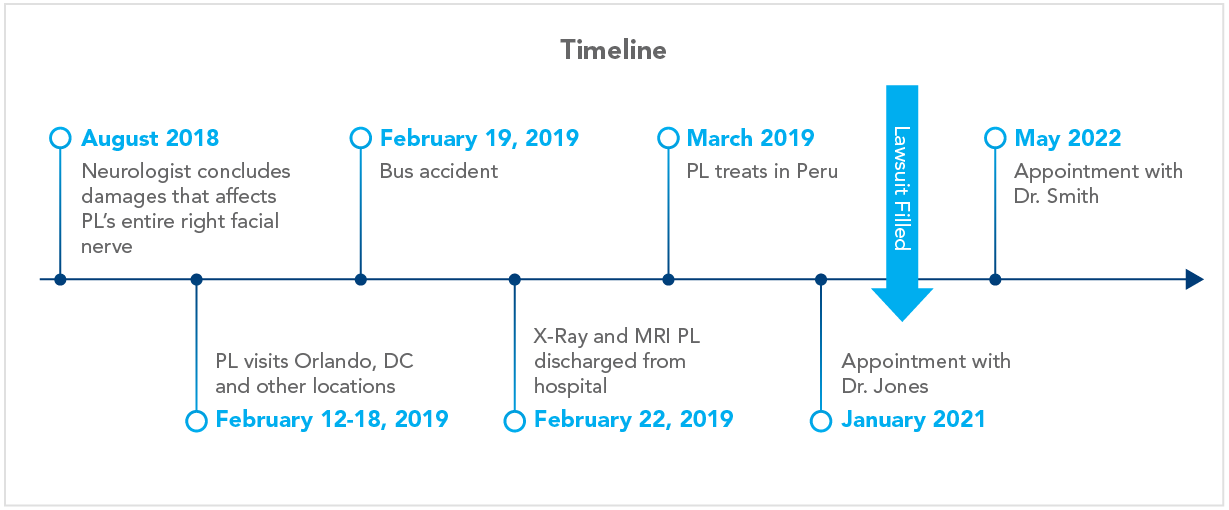
Most cases can benefit from a visual timeline to guide the jury through the narrative and help them view events from the legal team’s perspective. A timeline can help convey many dates that might easily be confused, helping the jury to place each fact within the entire arc of your presentation. In cases involving a myriad of injuries, surgeries, and doctor appointments, the details, dates, and number of these medical interventions are easily missed or forgotten by jurors unless they are spelled out in a memorable way. A visual timeline enables jurors to see when and where this series of events occurred and to visually separate pre-existing injuries from accident-caused injuries in a memorable way.
In the example below, the issue was the plaintiff’s potential exaggeration of injuries. The defense attorney used this timeline to show treatment for similar conditions before the accident and to stress how the plaintiff’s treatment changed significantly after filing the lawsuit.
2) Bar Graphs
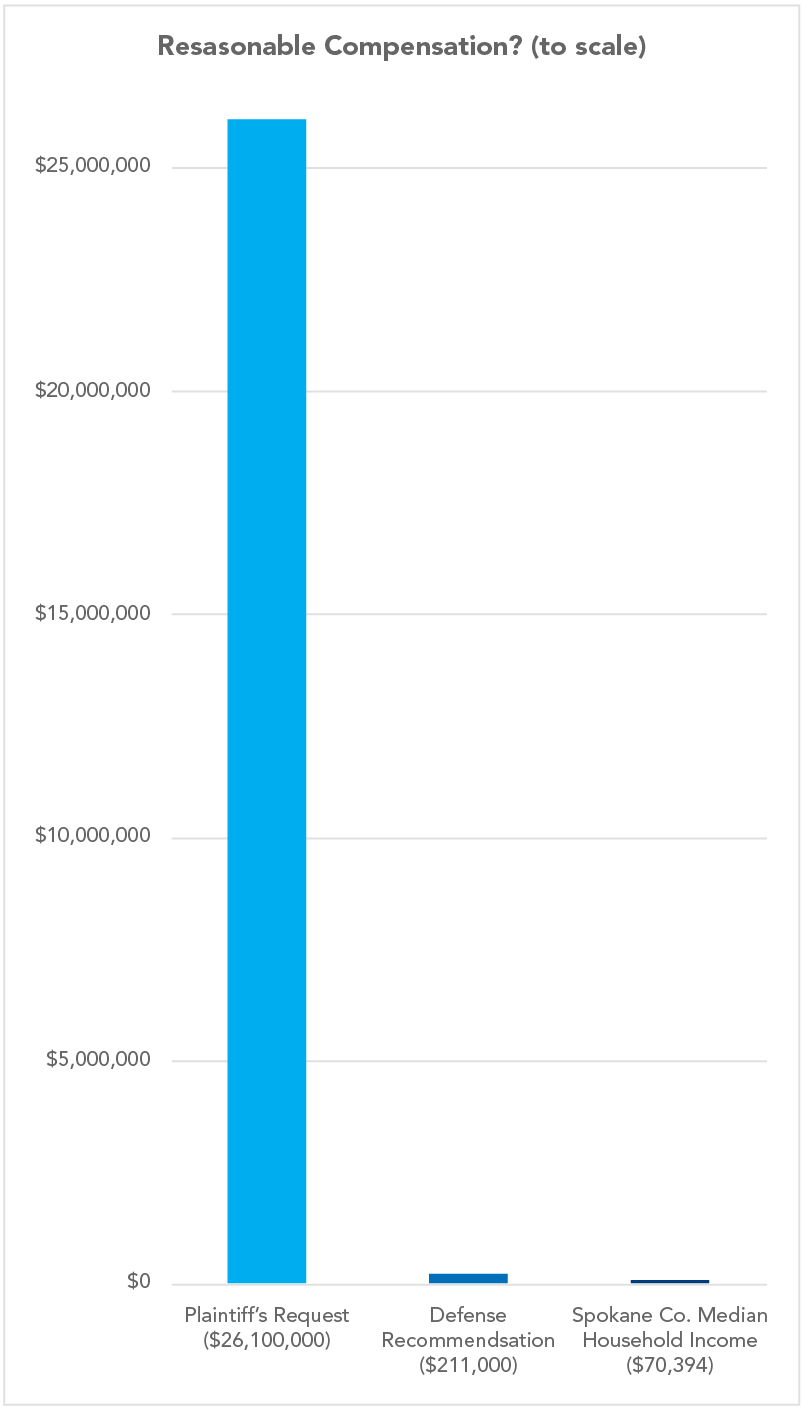
Graphs are a great way to make numbers appealing to the jury. A bar graph visually conveys numeric values, making them easier to absorb and remember than numbers alone. Attorneys can also use bar graphs to compare amounts, either showing the vast difference or the closeness of numeric values. Generally, humans are very bad at conceptualizing the differences between large numbers.3 Showing in picture form what the number really means, especially in comparison to another amount, can help significantly.
The bar graph below shows how the plaintiff’s damages request compares, at scale, to the defense recommendation and a relevant real‑world benchmark, enabling jurors to more accurately evaluate reasonable compensation.
3) Scene Representations
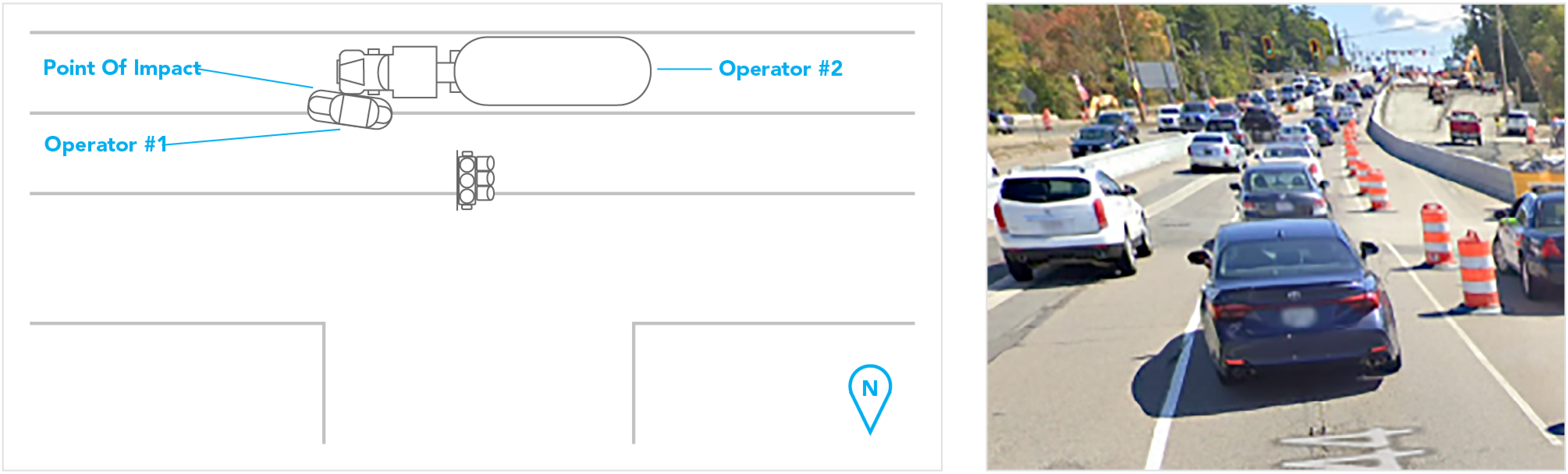
The jury is usually unable to visit the scene of the accident or issue under dispute. However, mock jurors often tell us they wish they could, and they highly value visual aids from any party that help visualize what happened in the case and “put them at the scene.” For example, with a motor vehicle accident, it is often difficult to understand the logistics and location of the incident from words and testimony alone.
Jurors typically respond well to animated recreations of accident scenes, which can be precisely created based on accurate 3D laser mapping. However, these recreations are costly and not feasible in every case. Alternate methods can be nearly as effective, including diagrams, maps, and representations of relevant objects or scenes that frame the issues you want jurors to consider. These trial visuals are often less expensive and require less specialized design work.
Attorneys can show a large diagram to give the jurors a representation of the incident, and even use Google Maps or conduct a “drive through” of the scene with a cell phone camera to put the jury “on the relevant road.” In the example below, the driver was detoured onto an unfamiliar and chaotic roadway due to construction. By providing an aerial map of the incident, a scene diagram, and a Google Street View, jurors were able to better see just how easy it would be for an accident to occur.
4) “Legalese” Tutorials
Trial visuals help jurors better understand and apply unfamiliar legal concepts. Although terms such as “damages,” “proximate cause,” and “burden of proof” are normal to lawyers’ ears, they are completely foreign to most lay jurors.
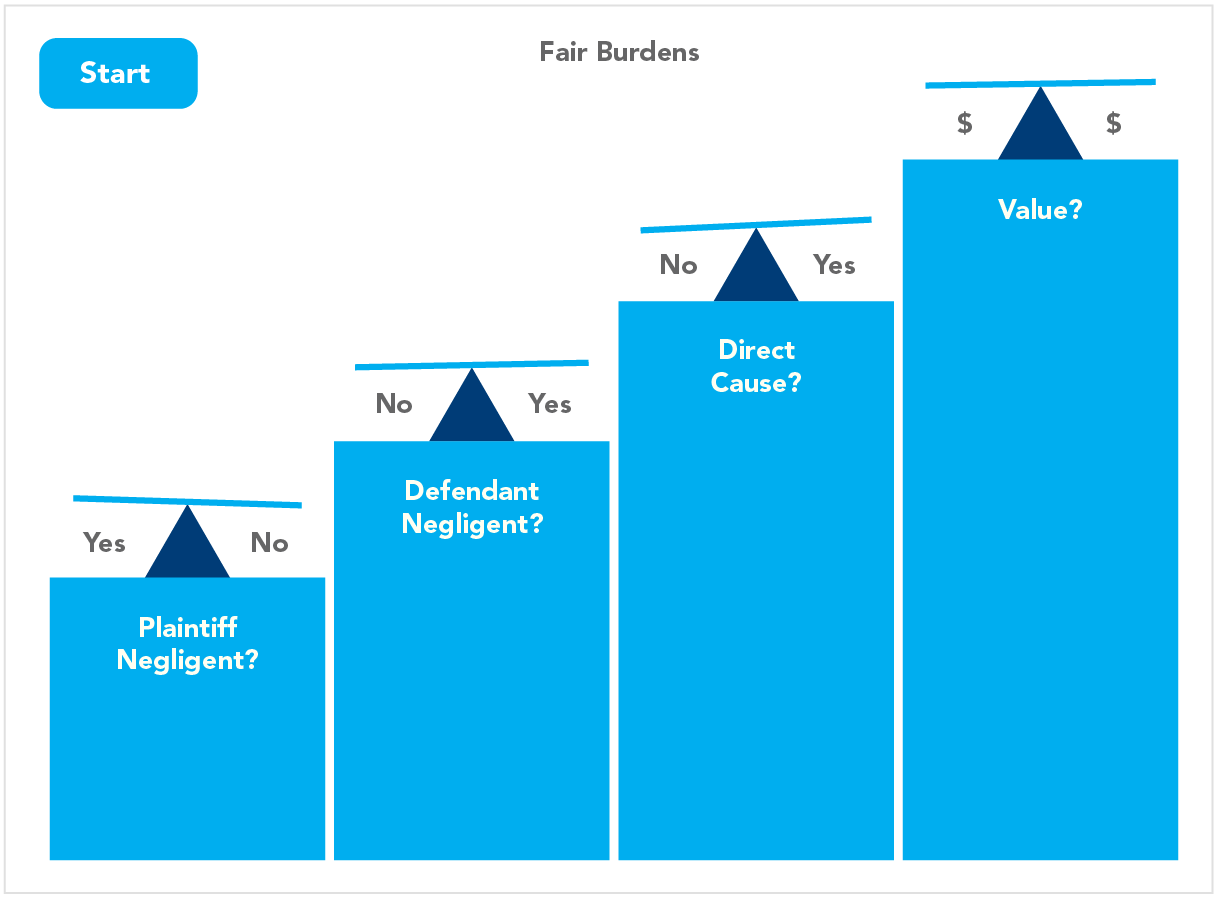
For instance, we created a “burden of proof stairway” video that teaches jurors how the burden of proof is supposed to work in the deliberation room. It allows counsel to clearly show jurors which issues the plaintiff must prove to win a money verdict, one issue or “step” at a time.
Through this custom demonstrative, counsel can control the building of a stairway as they summarize the evidence, and show the jurors how to weigh the evidence on each issue using a “teeter-totter” visual. If the weight of the evidence favors the defense on any issue, that “step” cracks apart and collapses. This tells the jurors that, under the law, the evidence shows plaintiffs have not proven their case. If the weight of the evidence favors the plaintiffs, this tells the jurors that the plaintiffs have met all the necessary steps to prove their case. This interactive visual is a powerful teaching tool and especially effective in closing arguments.
Quick Tips for Preparing Trial Visuals
1) Focus on Visual Appeal
Modern jurors are surrounded by high-quality graphic design in their daily lives. An amateur representation or poorly executed design can distract jurors from the core arguments.
Trial teams should use designs that are simple and harmonious, clearly conveying the points being made without unnecessary clutter. With PowerPoint slides, fewer words are usually better.
Using a color palette that is easy on the eyes and allows key points to be highlighted helps the jury engage with the visual. Certain colors evoke certain feelings for the audience. For example, warmer colors like orange or red are often associated with bad or negative feelings. On the other hand, cooler colors like blue or purple are seen as calmer, more neutral colors. Green can be associated with good feelings.
2) Consider Juror Literacy
The average US adult reads at a 7th to 8th-grade level,3 with 54% reading below a 6th-grade level.4 This poses a challenge when presenting the complex details of a legal case: the presenter not only bears the weight of winning over the jury but must also use language and tools that jurors fully comprehend.
Trial visuals support accessible communication, improving evidence comprehension across varying juror ages, backgrounds, and education levels. For example, a simple pie chart can introduce a critical point that could have been missed or misunderstood if explained verbally alone.
3) Test & Refine Visual Strategies
It is valuable to test key demonstratives in a focus group with a panel of jurors from the trial venue, or via a full mock trial, to see what jurors really think. Trial teams can then refine visuals and focus on those that best convey the case message.
In Conclusion
Trial visuals play a crucial role in presenting a case to a jury, not only keeping jurors engaged but also helping them grasp complex subject matter.
Timelines can help jurors organize the case story and events in their minds. Graphs can compare numbers to convey dramatic or small differences, while the use of color can influence feelings and connotations about a certain numerical value or statistic. Scene representations and legal‑concept tutorials bring jurors closer to the case facts and relevant laws, transforming abstract ideas into experiences they can see, understand, and apply.
When jurors can see your story, they are far more likely to understand and remember it. This is why visual advocacy should be a key part of any jury trial strategy.
Originally published by First Court in 2024; updated/republished by IMS Legal Strategies in 2026. Read about our strategic union here.