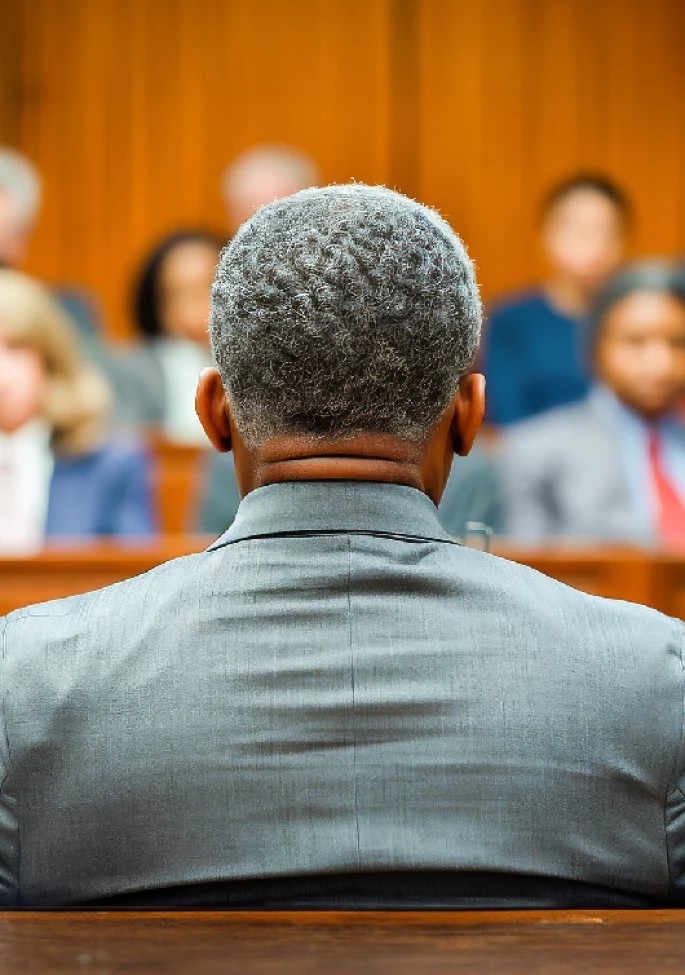

Anti-corporate bias and conspiratorial thinking are often discussed concurrently, but they are not the same problem. Anti-corporate bias is the assumption that a company cares more about money than people. Conspiratorial thinking is what happens when a juror looks at a complicated fact pattern, multiple witnesses, layers of paperwork, an insurer somewhere in the background, and decides the complexity itself is proof of something being hidden. Either belief system can affect how jurors evaluate the evidence. When both are present in the deliberation room, a factual dispute can quickly become a judgment about the corporation itself.
I have heard far fewer discussions about how these risk factors are not actually about "corporations" as an abstract category, but rather about specific corporations, and how the risk jumps considerably when the jury already knows the defendant's name from somewhere other than the courtroom.
The Name Shapes Opinions Before Evidence Can
A while back, I ran a mock trial for a case involving a large retail chain, the kind almost everyone in the room had shopped at recently. The facts were ordinary premises liability with nothing unusual. But by the time deliberations started, several jurors were not working from the evidence at all. They were drawing on their own history with the company: a bad return, something they read about how workers are treated, a general hunch that any corporation that big must be cutting corners somewhere. One juror said something close to, "I don't need the lawyers to tell me what this company is like. I already know."
I saw the same thing in another mock trial for an oil and gas company. Jurors came in with pre-formed opinions, mostly from what they had absorbed about the industry over the years, including drilling controversies, environmental headlines, and general suspicion of the sector. Many said outright that the company's name and its history in the news were enough for them, regardless of what the actual facts of this case showed.
Both cases had the same shape: fault was assigned by the name, not the facts. A generic, unnamed corporate defendant typically receives some baseline juror suspicion. A defendant about whom jurors already have a personal story can start the trial at a disadvantage before the evidence is even in.
The Numbers Show Pervasive Anti-Corporate Bias
A February 2025 survey of jury-eligible adults across 14 states, run by the law firm Orrick, Herrington & Sutcliffe, found that in disputes between individuals and large corporations, only 10% of respondents said they would generally lean toward the corporation, while 56% said they would lean toward the individual.1 That is a substantial starting disadvantage for a corporate defendant, even before jurors hear anything about the particular company involved.
What that survey did not capture, and what I keep seeing in mock trials, is what happens when jurors recognize the company. Their opinions may come from personal experience, news coverage, something they heard from a friend or family member, or simply the company's reputation. Those impressions can become part of the case even though they have nothing to do with the evidence being presented.
If one juror opens deliberations with "I've had problems with this company before" or "Everybody knows what they did," it lands differently than the same comment about an unnamed defendant. It sounds like corroboration instead of opinion. Jurors who were on the fence may start treating that experience as another piece of information about the company.
The Client’s Reputation Should Guide Jury Selection
I recommend building voir dire questions and themes around the reputation your client actually walks in with, not the generic reputation of "a corporation." Here are a few quick tips:
- Ask about the company by name, not just about corporations as a category. A juror with no stated bias against "big companies" can still be sitting on a strong opinion about your specific client. Generic questions will not identify that person.
- Find out what jurors think they know and where they got the information. Personal experience, news coverage, and hearsay can carry different weights and accuracy; you want to know which one you are dealing with before building themes around it.
- Do not try to talk a juror out of a bad customer service experience or a headline they have carried for years. You are unlikely to change an already-formed opinion. What can work is reframing the profit motive instead of denying it: “Yes, the company cares about its bottom line, and that motive is exactly why it has reason to get this right.” Tie that motive to the specific conduct at issue rather than letting it float as a general character judgment.
If your client's name is one that jurors are likely to recognize, it needs to be addressed during jury selection. Waiting until a juror brings up the company's reputation during deliberations is far too late.